
It's Mailbag Time
(whooo)

Okay, originally I was going to lean on this gimmick like every quarter or something. But I so enjoy doing this. Besides, a lot of these questions I actually answer before posting here… so I have all this “content” sitting around.
Anyway, enough of the disclaimer. I’m also in a hotel near LAX, lounging until it’s time for my flight. Right now, it’s 10:30 a.m. My flight is at 6 p.m. And I already checked out of my room (rookie mistake). So, I’ve got time to kill.
As always, actual questions (and comments) sent my way.
Here. We. Go.
Rev. Yoo, Does God hear the prayers of the unbeliever who is trying to pray? I have been taught growing up that God doesn’t hear the prayers of unbelievers because they don’t have access to God through Jesus.
What you were taught—that God doesn’t hear the prayers of unbelievers—is something a lot of us grew up hearing, but it doesn’t square with the larger witness of Scripture or the heart of God revealed in Jesus.
The Bible is full of stories where God hears and responds to people who were outside the faith community—Hagar in the wilderness, Cornelius in Acts, even entire nations crying out in the prophets. Psalm 34:18 reminds us that the Lord is “near to the brokenhearted,” and that’s not limited to people with perfect theology.
So yes, I believe God hears the prayers of those who are seeking, even if they wouldn’t yet call themselves believers. In fact, the very act of praying is itself evidence that God’s Spirit is already at work drawing them closer.
My sister began posting things I don’t agree with—most recently a video about how God can “heal” someone from being gay. Believe me, I’ve prayed countless times for that kind of “healing,” and it’s never come. Now my family thinks I can still somehow be changed.
This has left me wrestling with the idea of unconditional love, something I feel I’ve never truly experienced. I’m really trying not to hold grudges or let bitterness take root, but the constant stream of harsh and hurtful comments from people is difficult to navigate.
What are your thoughts or advice on how to handle situations like this
Thank you for trusting me with such an honest and vulnerable piece of your story. I’m so sorry you’ve had to carry this pain, especially from people who should have been the first to love you unconditionally. What you’re describing — being told you need to “change” — is not the heart of God. That’s the weight of bad theology, not the truth of the gospel.
You’ve prayed for healing, and here’s what I want to say clearly: God has already answered. You are not broken. You are beloved exactly as you are. The “healing” isn’t about becoming straight, it’s about being freed from shame that was never yours to carry in the first place.
It’s good that you want to avoid bitterness, but don’t confuse that with putting yourself in harm’s way. Boundaries are a way of practicing love — for yourself and even for your family. You don’t have to absorb every harsh word to prove your faith or your forgiveness. Sometimes the most faithful thing we can do is step back and let God work on hearts that are not yet ready.
Unconditional love is real. You’ve already experienced it in Christ, and you can experience it in communities that truly reflect his welcome. If your family can’t embody it yet, that’s their loss — but it doesn’t change your worth.
I have a question for you about John 14:6 - “No one comes to the Father except through me.” This passage has always troubled me because many Christians I know use it to be exclusionary of non-Christians and I have always seen Jesus as very inclusionary.
You’re right that John 14:6 has often been used in ways that feel more like a barrier than an invitation. For me, the heart of that verse isn’t about exclusion but about reassurance: if we want to know who God is, we look at Jesus. He is the way, the truth, and the life — the fullest picture of God’s love. That doesn’t mean we get to decide the limits of God’s mercy, or that God is boxed in by our categories. I trust, as you do, that God’s desire is for all to be reconciled, and that God’s love is far wider than we can grasp.
So when people use the verse as a weapon to divide, I think they miss its deeper truth: Jesus came to reveal God’s love, not to close the door on it.
Although I was raised Southern Baptist, at a very late stage in life, I have realized I do not agree with a majority of their doctrines. I still want to give God his portion, but am not sure about supporting a church I no longer fully believe in. Do thithes have to be given to a church, or to organizations that are doing good in Christ’s name? Any suggestions or comments?
Thank you so much for sharing your heart with me. It takes courage to wrestle with long-held beliefs and to ask these kinds of questions. You’re not alone in this journey—many of us have had seasons of re-examining what we were taught and what it means to faithfully live out our love for God.
To your question: no, tithing does not have to be restricted to a local church. The original practice of tithing was about supporting the work of God’s people in the community—providing for worship, caring for the vulnerable, and making sure no one was left behind. I believe when you give in a way that reflects God’s heart—whether that’s to a church, a ministry, a nonprofit serving in Christ’s name, or even directly to someone in need—you are honoring God.
That said, being part of a faith community (even if imperfect) has a unique value. A church isn’t just an institution; it’s a family of faith where we’re shaped, challenged, and supported together. Ideally, giving to a church helps sustain that shared mission. But if your conscience doesn’t allow you to give there right now, prayerfully consider supporting organizations that align with the gospel work you do believe in.
The key is less about the “where” and more about the “why”—giving as an act of gratitude, generosity, and participation in God’s work in the world.
How can we love (we started a list of folks in Trump’s inner circle)…love those that harm others?
Well. You’re not alone in struggling with how to love those whose actions cause real harm. Loving our enemies doesn’t mean excusing what they do or pretending the harm doesn’t matter — it means refusing to let hate take root in us. Because the truth is, refusing to love them doesn’t make us holier. It just risks embodying the very thing we’re trying to resist.
Practically, here are a few ways I try to live that out:
Pray for their transformation, not their downfall. It shifts the focus from revenge to hope.
Set boundaries. Love doesn’t mean letting people keep harming us — sometimes love is “no.”
Work for justice with compassion. Speak the truth, stand against injustice, but don’t dehumanize those who oppose you.
Check your own heart. Ask: “Am I fighting this with the same weapons I want to see dismantled?”
Love doesn’t mean approval. It means we keep hoping for God’s grace to reach even hard hearts while refusing to become the thing we oppose.
I need help about my son who hates God because his father died 6 months ago. i wanted him to go with me to a church but he’s not liking the idea just because he didn’t belong there’s a God. but when he’s there.. he’s enjoying the songs and all. I told him its ok to get mad at God.. but i don’t know how to answer his question.. why God took Daddy away and he’s asking if God doesn’t want his daddy to live. It breaks my heart that’s how he sees God. Can you guide me how I’m gonna connect his dad’s death to God?
First, thank you for trusting me with such a tender and heartbreaking part of your story. I’m so sorry for the loss you and your son are living through. Six months is no time at all when it comes to grief, and the fact that you’re already reaching out for support shows both love and courage.
Your son’s anger and questions are normal. Children often say out loud what many adults also wonder: Why did God take him? Did God not want him to live? Those are honest questions, and the worst thing we can do is dismiss them or cover them up with easy answers.
Here’s what I would say to him in simple terms: God didn’t take his dad away. A brain aneurysm did. God doesn’t cause those things — but God never leaves us alone in them. If he wants to be angry at God, that’s okay. God can hold his anger. And at the same time, God is crying with him, and with you, because death and loss break God’s heart too.
Please know I’ll be holding both of you in prayer: for strength, for healing, for the assurance that your son’s questions don’t push him away from God but can actually be part of how he meets God in this season.
What is a good way to apply the entirety of 1 Timothy in daily life?
When it comes to 1 Timothy, one helpful way to approach it is to remember it’s written as pastoral guidance for a young leader in the early church. Some of the details are very bound to that context, but the larger themes are timeless: pursuing godliness, caring well for community, keeping faith central, and guarding against teachings or practices that distort the gospel. In daily life, I’d sum it up as: live with integrity, treat others with respect, stay rooted in prayer and Scripture, and let love guide your leadership and service.
Have you done one yet in the Parable of the Talents? I struggle with this one because of the homonym teaching methodology. I feel that the servant did the right thing and the king was the bad guy. Am I wrong?
Thanks for taking the time to wrestle with Scripture rather than just accepting easy answers. That’s exactly what Jesus’ parables are meant to do. They push us to question, rethink, and dig deeper.
You’re not wrong to wonder if the master in the parable comes off as unjust. In fact, some scholars read it just the way you describe: that the servant who buried the talent was refusing to participate in an exploitative system, and the parable exposes the harshness of power. Others read it more traditionally, as a call to be faithful and courageous with the gifts God entrusts us.
Both approaches are worth sitting with, and both can challenge us in different ways. That’s the beauty of parables — they’re not neat little morality tales but stories that make us wrestle with God, the world, and ourselves.
I have a question on how I should respond to people who insist that the Earth is only 6000 or 10,000 or however few years they say?
When it comes to conversations about the age of the earth, I usually remind people that the Bible was never meant to be a science textbook. Genesis tells us who made the world and why — not the exact mechanics of how. The poetry of Scripture and the insights of science are answering different questions, and they don’t have to cancel each other out.
I also like to remind folks that if “the heavens declare the glory of God” (Psalm 19), then studying creation — whether through telescopes or fossils — is one more way of marveling at God’s work. Faith isn’t threatened by truth, wherever we find it.
The real point is faith, trust, and wonder at God’s love — not trying to police the method or timeline. Sometimes the best answer really is, “Through God all things are possible, and we don’t have to be afraid of questions.”
I’m a great grand daughter of Southern Baptist preachers, but I was raised in an the Assembly of God Church. I am 63 years old. Since I can recall my church preached and hammered young people with the rapture. We watched Thief in the Night and from that moment on I lived in fear. If the lights went out, I called good Christians. If it was New Years 1999, I expected to have my h6sband and children raptured, leaving me behind. Forget a relationship with Jesus or God. I knew I wasn’t good enough to be picked. Yes saved through Christ, but my point is I’m shocked to learn it not sound Bible teaching. is it?
What you describe—growing up under constant fear of being “left behind”—is something many people have experienced, and it can leave deep scars. I’m so sorry you were taught a version of Christianity that made God feel unsafe and conditional.
To your question: no, the rapture as it’s been popularized in movies and sermons (Thief in the Night, Left Behind, etc.) is not “sound Bible teaching” in the sense of being a historic, core Christian belief. That view comes from a 19th-century interpretation called “dispensationalism,” which took a few scattered verses (mostly from 1 Thessalonians and Revelation) and built a whole end-times system that’s foreign to the early church, to the creeds, and to most Christians worldwide. For nearly 1,800 years Christians didn’t talk about a secret rapture at all.
The heart of the Gospel is not fear of being abandoned but the promise that in Christ, God has already claimed and loved you. The consistent biblical witness is that nothing—“neither death, nor life… nor anything else in all creation”—can separate us from the love of God in Christ Jesus (Romans 8).
Regardless, please hear this: your worth and salvation were never about being “good enough to be picked.” You are already beloved.
Tips for new minister?
Welcome to ministry where people will restore your faith and where people will drive you up the wall — and sometimes, it’d be the same person.
Everyone tells you, we’re the shepherd of our flock. What no one ever told me was that these sheep bite. And sometimes they bite hard. And a lot of times, they’re not angry at you, they’re hurt from somewhere else, and church is where they act out.
So, don’t take things too personally.
Don’t take yourself too seriously.
Boundaries are important.
It’s better to have ppl think that you’re a jerk than be a people pleaser. Being a people pleaser is going to kill you because YOU. CAN’T. PLEASE. EVERYONE. Be mission/purposed minded rather than focusing on making people happy. In all honesty, I don’t think our job is to “make people happy.” Our job is to make disciples of Christ. That will always rub folks the wrong way.
And remind yourself to pay attention to the small and ordinary things because that’s where miracles are waiting to happen.
Btw, speaking about you can’t please everyone:

If you’re curious, this is in response to a video (below).
Boy… if you found out where I was, I’m afraid you might’ve had a stroke. Honestly, this says quite a lot about you more than it does me. Like… you couldn’t even use your own example? You had to lean in on the “I know a guy” type of vibe.
What are you struggling with that you decided to respond to my video like this? What is the plank that is blinding your sight? Are you angry? Bitter? Envious? Were you hungry, and like the Snickers commercial, you weren’t being you?
Were you just having a shitty day and decided this was how you were going to release some of your angst? Do you also like to control other people in your life? Because if you do, that must also mean you’re lonely.
God forbid pastors go on vacation, ya know? God forbid we hang out on the shore of a beach and eat fish tacos while marveling at the resurrection of Christ (true story, happens in the Bible, except maybe not fish tacos).
I kindly ask you to come down from your performative cross because that wood could be used for actual good. And instead, heed the words of Christ: focus on the plank in your own eye.
Why are you so concerned about what I do when you have no idea who I am except for two minutes of a video?
Anywho, in the words of Ted Lasso quoting Walt Whitman: be curious, not judgmental.
Oh, and currently, I’m sitting outside a hotel on a nice sunny day in Los Angeles, enjoying an iced coffee, jamming out to some bangers, and just enjoying the hell out of the time I have here. Do I have your permission for this privilege of enjoying Los Angeles?
Just kidding. I couldn’t care less what you think.
Here’s a mint mojito (coffee) from Philz. Cheers!
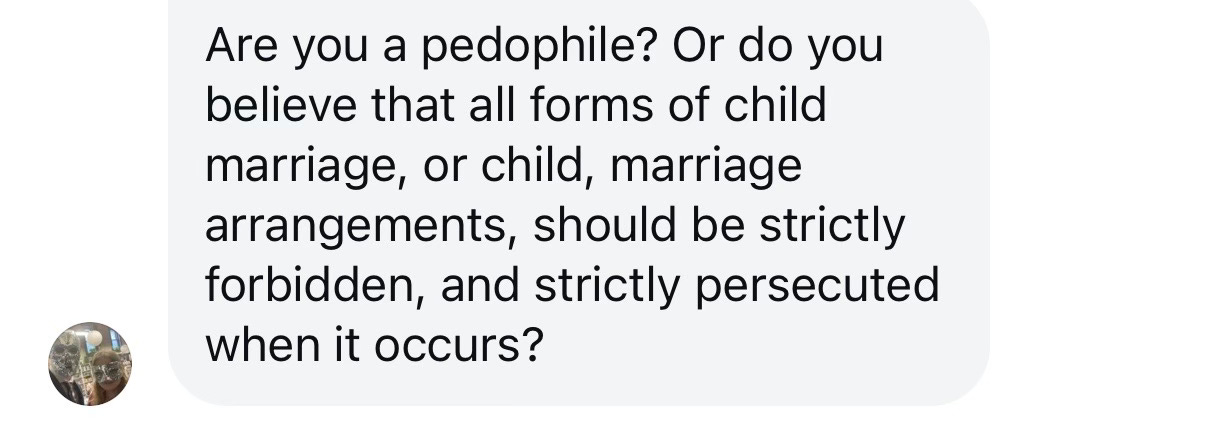
Lol. Yup, these are the people God sends to my inbox.
Never a dull moment.
— Joe+
I’m sorry, Joe! I could not help laughing at the last part of your post. Whoa!
I found your work recently, exactly when I needed a different perspective on faith, God, Jesus, relationships….the whole enchilada.
Thank you for your faithful service and please know that your work is being read, prayed about, forwarded to friends, and discussed with open minds. Hearts will follow in time, or not.
Your insights are acting like a sifter. In goes a memory, out comes a possible revelation or idea that never occurred to me before.
Beyond all that God’s love is making itself felt and after 65 years of believing, real trust may have taken seed in me in the past few weeks.
BTW mailbag is absolutely wonderful!
You are such a blessing to me (and many others, I’m sure!)
Regarding the question about John 14:6 - “No one comes to the Father except through me.” (Reminiscent of Calvin’s “Limited Atonement”) My favorite seminary professor (who was a Barth scholar) borrowed from Barth that, yes atonement comes through Christ alone. In other words Christ made the path to God available to all. Who knows when that “door” closes?! The scriptures should never be used for gatekeeping.